
The Bank of Canada is keeping its key interest rate at 2.25 per cent as global conflict, rising energy costs and new U.S. tariffs add pressure to the economic outlook.
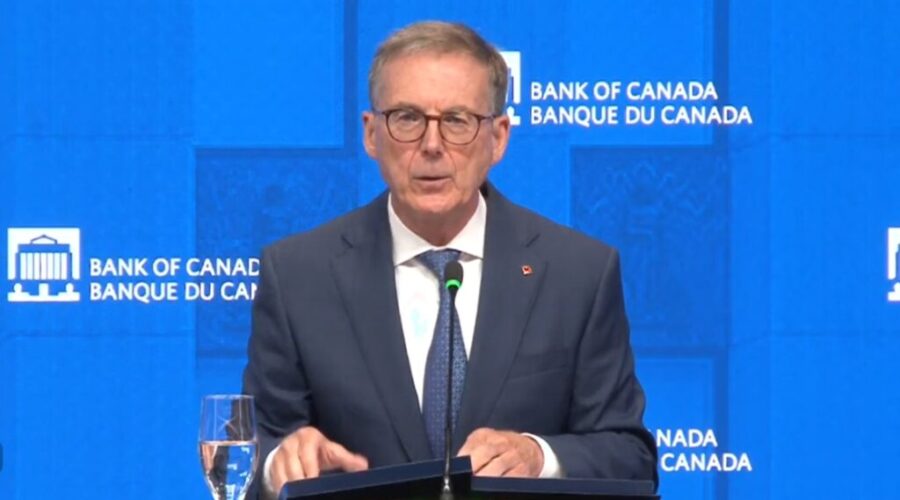
Governor Tiff Macklem said the governing council reviewed recent data, the risks to the outlook and the implications for monetary policy before deciding to leave the rate unchanged.
He told reporters the conflict in the Middle East is keeping oil prices high and new U.S. tariffs are weighing on Canadian exporters.
“The conflict in the Middle East has persisted without a clear path to resolution since our last decision in July,” Macklem said.
“Closer to home, the United States has imposed new tariffs on Canadian exports, and the Canadian government has responded with proportionate tariffs or counter‑tariffs and new supports for hard‑hit businesses and workers.”
The Bank said Canada’s economy strengthened in the second quarter, with GDP rising 3.3 per cent after very weak growth earlier in the year.
Macklem said the rebound was broad-based, with solid consumer spending, a pickup in housing activity and sharp increases in exports and business investment.
Labour market conditions have also improved, with the unemployment rate edging down to 6.4 per cent in July, though indicators still point to excess supply in the economy.
Macklem said new U.S. tariffs and the threat of further action pose risks to the sustainability of the recovery.
“If tariffs remain in place, they will hit targeted sectors hard. But we don’t expect them to have a large direct impact on the overall level of economic activity in Canada,” he said.
The Bank explained the affected products represent about 5 per cent of Canadian exports to the United States and said federal support programs will likely soften the impact for hard-hit businesses and workers.
The larger concern, Macklem added, is that heightened uncertainty around Canada-U.S. trade relations could lead businesses more broadly to delay investment and hiring.
Inflation has been hovering around 3 per cent in recent months, mainly due to persistently higher gasoline prices linked to the conflict in Iran.
The Bank said inflation excluding gasoline was 2.2 per cent in July and measures of core inflation remained close to 2 per cent, suggesting limited spillover so far.
But Macklem said upside risks to the inflation outlook have increased as oil prices and refinery margins stay elevated.
“The most important thing that is going to guide our decisions going forward is going to be our inflation forecast and our assessment of the risks around that,” he said.
The Bank said new U.S. tariffs and Canadian counter‑tariffs will raise costs for some businesses and could feed into consumer prices over time.
It also noted that long-term bond yields have moved up globally, tightening financial conditions.
With the economy and inflation evolving broadly as expected in the July Monetary Policy Report, the governing council agreed to leave the policy rate unchanged.
The Bank said it will continue monitoring the strength of the recovery and the path of inflation and will adjust policy if needed to keep inflation close to its 2 per cent target.