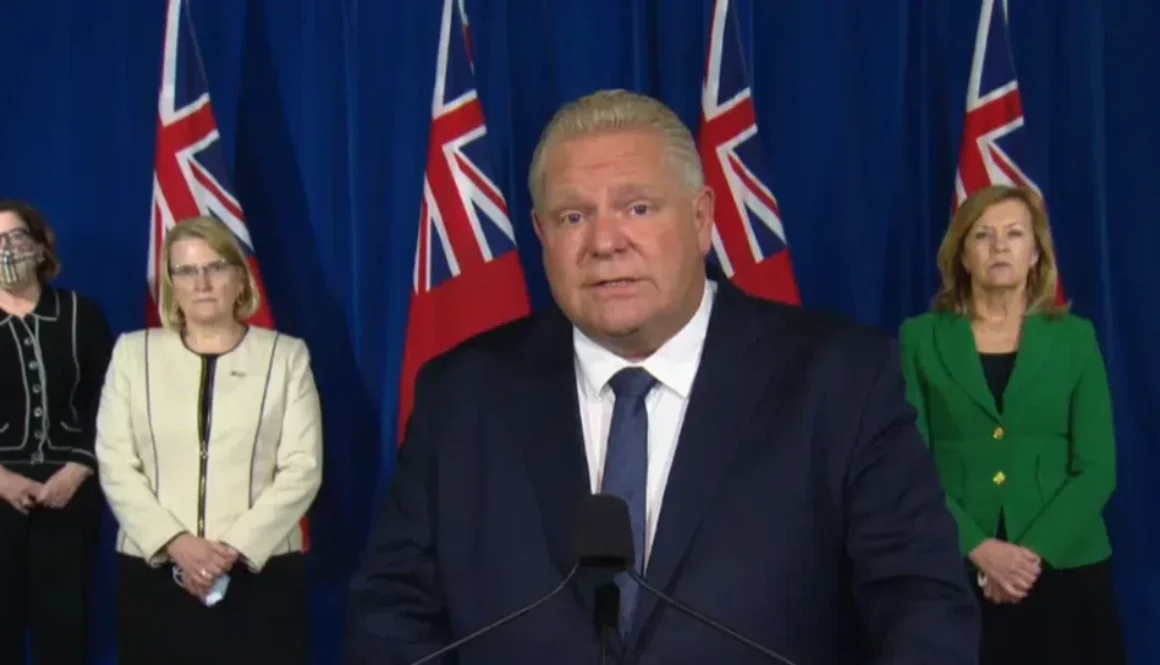
The provincial government is enacting further measures in the fight against the Omicron variant of COVID-19.
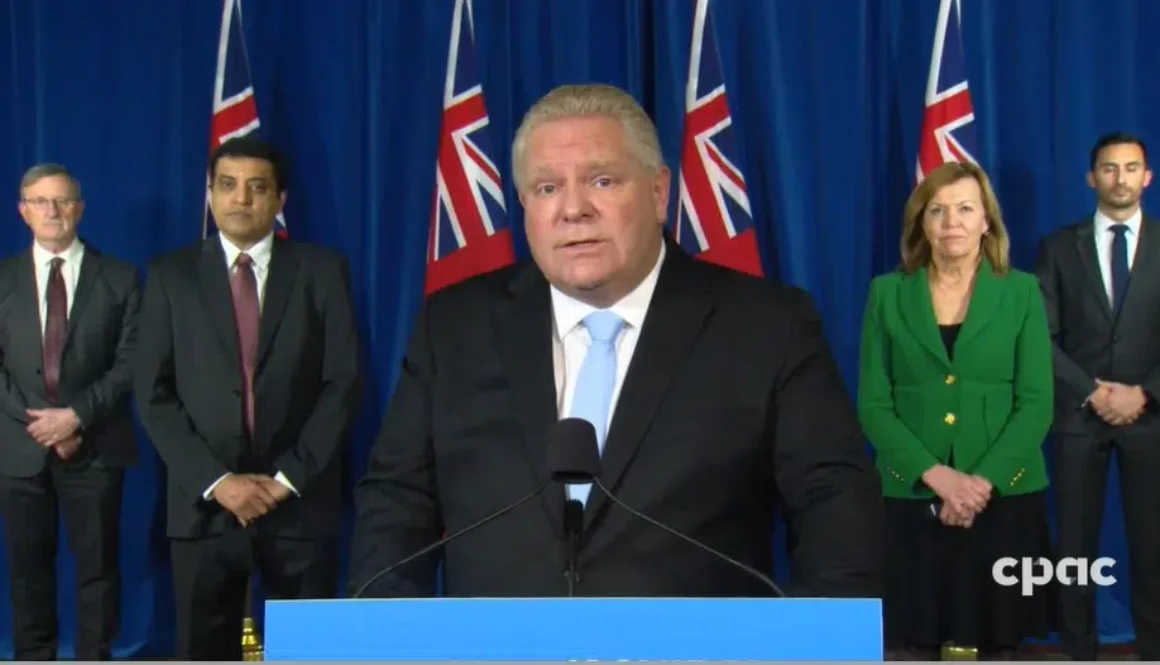
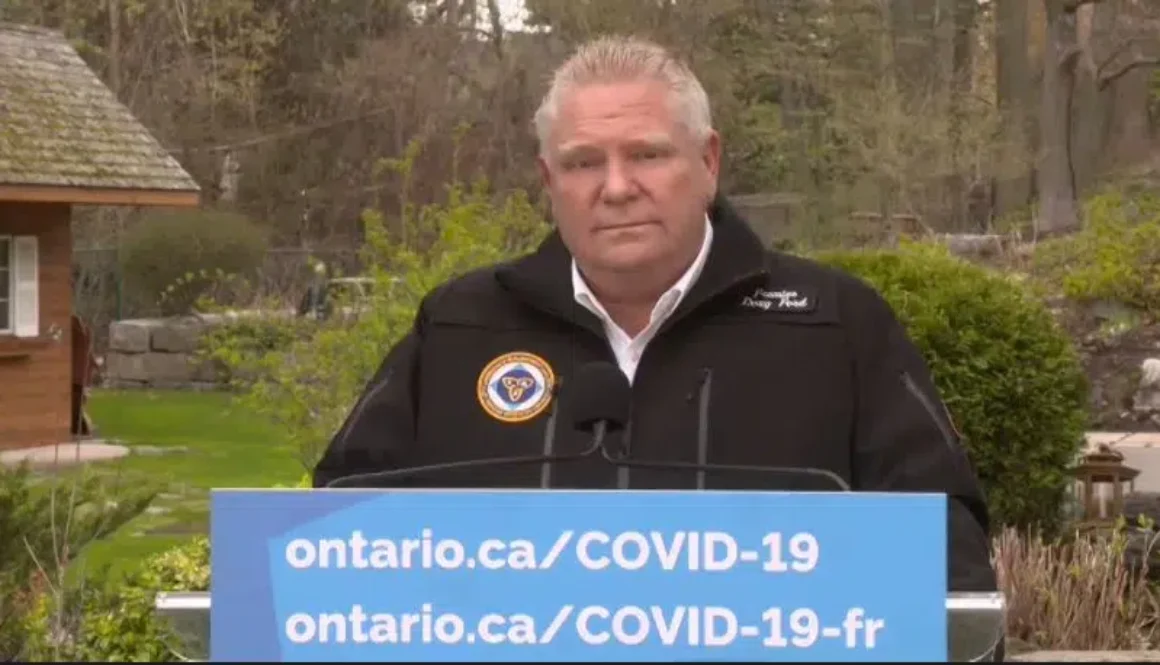
Alongside Medical Officer of Health Dr. Kieran Moore Friday, Premier Doug Ford enacted the following measures will begin at 12:01 a.m. on Sunday, December 19th:
Indoor settings, except religious facilities, will be limited to 50 per cent capacity
The number of patrons permitted to sit at a table will be limited to 10 people and patrons will be required to remain seated in restaurants, bars and other food or drink establishments, meeting and event spaces and strip clubs
Bars and restaurants, meeting and event spaces and strip clubs will be required to close by 11:00 p.m. with take out and delivery will be permitted
Food and/or drink services will be prohibited at sporting events; concert venues, theatres and cinemas; casinos, bingo halls and other gaming establishments; and horse racing tracks, car racing tracks and other similar venues
The sale of alcohol will be restricted after 10:00 p.m. and consumption of alcohol in businesses or settings after 11:00 p.m.
Maximum allowable size of indoor social gatherings will be 10 while 25 people can gather outdoors
The province is ramping up the eligibility for booster doses against COVID-19.
In response to the Omicron variant, Premier Doug Ford announced Wednesday a pair of measures, including allowing anyone 18 and older to make an appointment for the third shot starting at 8:00 a.m. on Monday, December 20th.
A three-month interval has to have passed since your second dose in order to be eligible.
The provincial government says it will be expanding its Second Career training program.
Premier Doug Ford says starting in the spring of 2022 as many as 240 thousand people will be able to be re-trained.
“Our government is determined to do whatever we can, to help connect workers who lost their jobs due to the pandemic by providing the training they need to start new, in-demand, and well-paying careers,” says Ford.
Ford says anyone entering the program will be eligible for up to $28,000 to pay for their education and training as well as living expenses.
“Since March of 2021 when the Second Career program was launched, it has helped thousands and thousands of people train for new careers and land new jobs. That’s thousands of people who have used this program to improve their skills and learn new ones.”
Ford expects to put another $275 million into the Second Career program and is proposing to extend the Ontario Jobs Training tax credit.
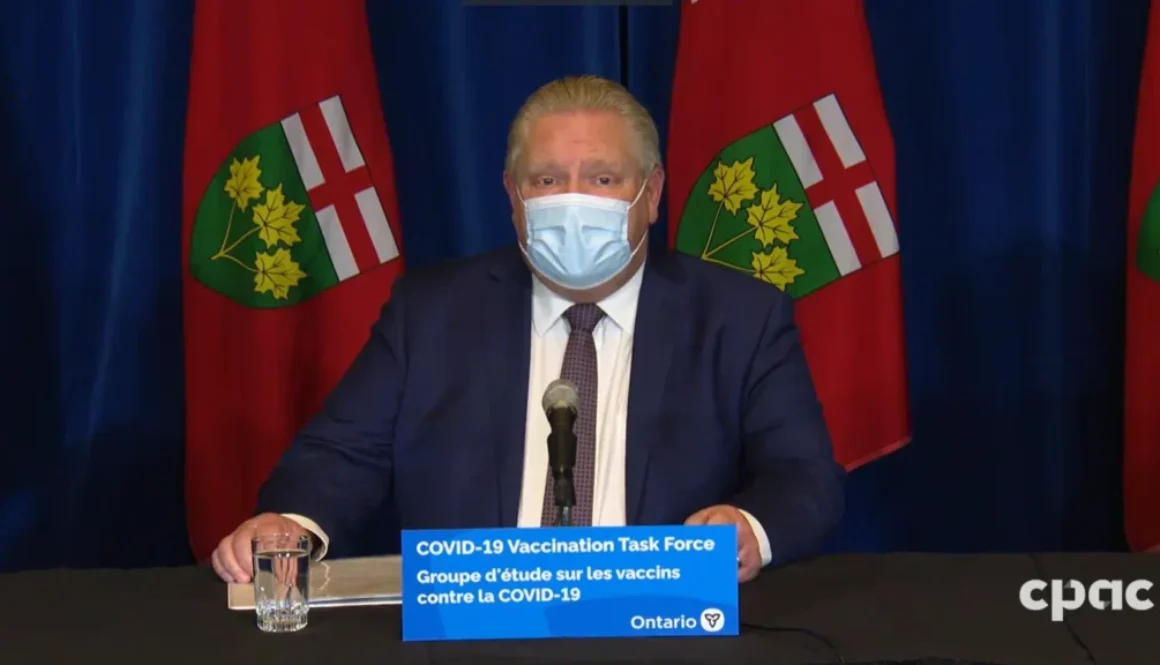
Premier Doug Ford will not mandate health care workers to get vaccinated against COVID-19.
In a statement released Wednesday, Ford said it’s a complex issue that could result in the departure of tens of thousands of health care workers.
“Experience in other Canadian jurisdictions tells us that implementing a province-wide vaccine mandate for hospital workers can negatively impact the care patients receive,” Ford pointed out. “British Columbia has had to cancel surgeries and diagnostic tests because of the sudden termination of more than 3,000 health care workers after implementing a vaccine mandate. Quebec has now abandoned theirs altogether because of the significant risk an abrupt loss of thousands of health care workers poses to delivering critical services.”
The statement went onto say that the government will maintain its flexible approach by leaving human resourcing decisions up to individual hospitals.
Ontario will ease the capacity restrictions in restaurants, gyms and casinos.
Premier Doug Ford, in the release of the province’s COVID-19 reopening strategy Friday, said it will take effect on Monday, October 25 at 12:01 a.m.
“Thanks to our cautious and careful approach to re-opening, we are now in position to gradually lift all remaining public health measures over the coming months,” said Premier Doug Ford. “This plan is built for the long term. It will guide us safely through the winter and out of this pandemic, while avoiding lockdowns and ensuring we don’t lose the hard-fought gains we have made.”
The plan includes gradually lifting all remaining public health and workplace safety measures, including the provincial requirement for proof of vaccination and wearing of face coverings in indoor public settings.
Also on Monday, the government will also allow other settings to lift capacity limits and physical distancing requirements if they choose to require proof of vaccination, including:
Personal care services (example barber shops, salons, body art)
Indoor areas of museums, galleries, aquariums, zoos, science centres, landmarks, historic sites, botanical gardens and similar attractions
Indoor areas of amusement parks
Indoor areas of fairs, rural exhibitions, festivals
Indoor tour and guide services
Boat tours
Indoor areas of marinas and boating clubs
Indoor clubhouses at outdoor recreational amenities
Open house events provided by real estate agencies
Indoor areas of photography studios and services
Locations where a wedding, funeral or religious service, rite or ceremony takes place may also implement proof of vaccination requirements for services, rites, or ceremonies at the location.
The rule won’t apply to settings where people receive medical care, food from grocery stores and medical supplies.
The province will also allow for greater capacity at organized public events such as Remembrance Day ceremonies and Santa Claus parades
TIMELINE
November 15, 2021
Lifting capacity limits in the remaining higher-risk settings where proof of vaccination is required, including food or drink establishments with dance facilities (night clubs, wedding receptions in meeting/event spaces where there is dancing), strip clubs, bathhouses and sex clubs
January 17, 2022
Lifting capacity limits in settings where proof of vaccination is not required
Proof of vaccination requirements may also begin to be gradually lifted, including for restaurants, bars and other food and drink establishments, facilities used for sports and recreational facilities and casinos, bingo halls and other gaming establishments
February 7, 2022
Lifting proof of vaccination requirements in high-risk settings, including night clubs, strip clubs, and bathhouses and sex clubs
March 28, 2022
Remaining public health and workplace safety measures will be lifted, including wearing face coverings in indoor public settings
In addition, the provincial requirement for proof of vaccination will be lifted for all remaining settings, including meeting and event spaces, sporting events, concerts, theatres and cinemas, racing venues and commercial and film productions with studio audiences
Ontario has been in Step 3 of the Roadmap To Reopen for more than three months.
Stay tuned on Ontario’s plan to ease COVID-19 restrictions.
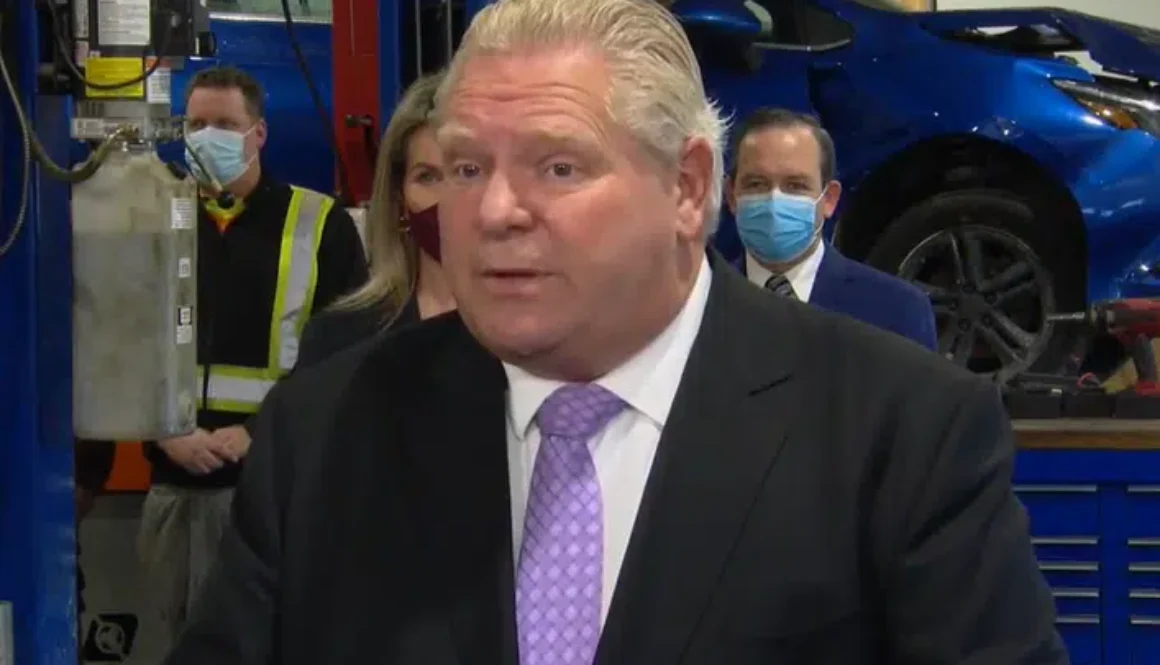
That’s the message from Premier Doug Ford as he was in the Windsor-Essex area Monday to announce funding for a new hospital.
Multiple reports emerged last week that the provincial government was working on a plan to exit Step 3 of the Roadmap To Reopen, which would include ending capacity limits in all locations where proof-of-vaccination requirements are in place.
“We’re going to unveil a plan this week that will stand the test of time moving forward,” remarked Ford. “We never, ever want to shut down this economy again. Everyone from front line health workers and the people of Ontario, I’m very grateful for your efforts and I want to thank you.”
On Friday, the province will officially shift to a QR code proof of vaccination after introducing the vaccine certificate program back on September 1st.
Premier Ford added, “Not everyone carries around their cell phone all the time, I’m talking about elderly parents, so we’re going to make sure that we still have the paper form of the vaccine certificate.”
Step 3 has been in place since the middle of July.
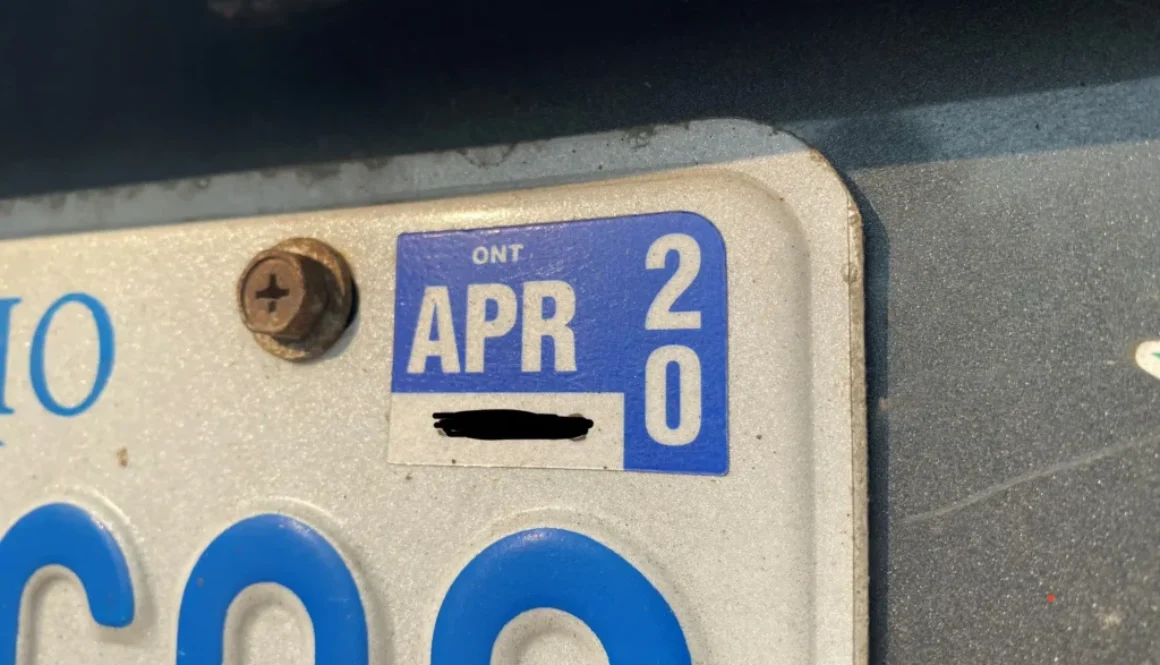
A reminder that sometimes things are just too good to be true; if you didn’t renew your licence plate sticker in 2020 you’ll have to pay double in 2021.
The Ministry of Transportation says that those who did not pay to renew last year will have to pay for 2020 as well as 2021 this time around.
That means for northern Ontario, you’ll be on the hook for at least $120 to renew, while if you’re in southern Ontario that doubles to $240.
This comes as a surprise to some after the Ford Government announced last year that in an effort to keep people home and stop the spread of COVID-19, all stickers and licences that expired on or after March 1st 2020 would be legal until further notice.
While that notice has not yet officially been given, the Province has started a social media blitz encouraging drivers to renew their stickers and/or licences online.
Thousands have already been displaced because of the raging forest fires in Northwestern Ontario, with many more preparing to evacuate if conditions worsen.
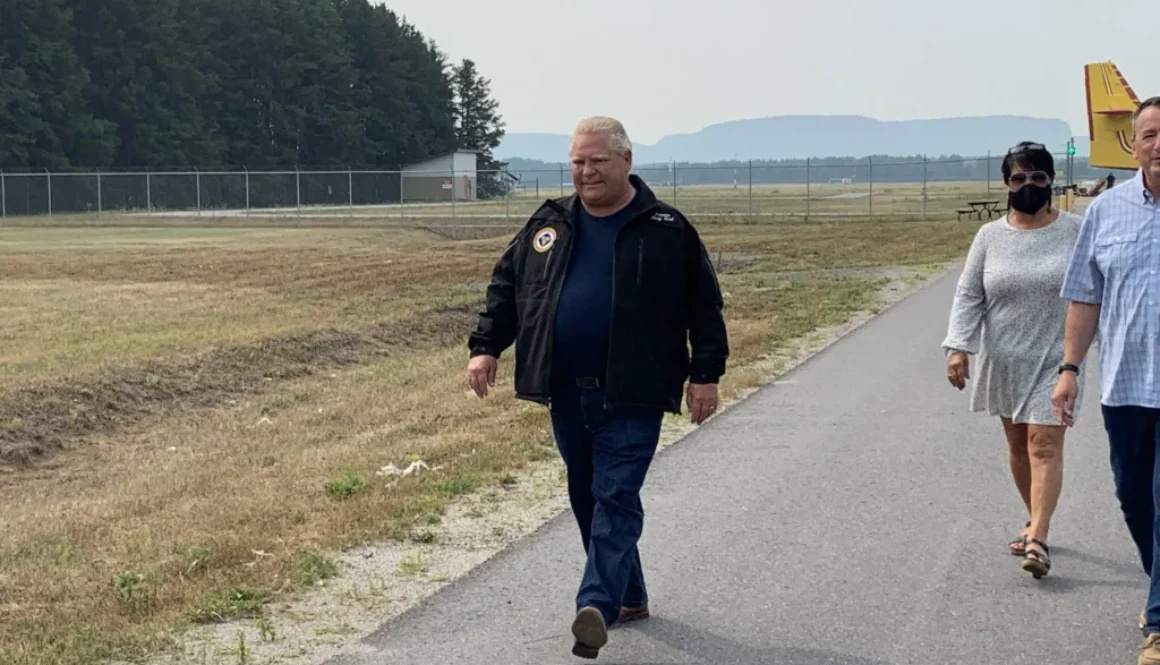
In response, Premier Doug Ford visited Thunder Bay to meet with the wildfire evacuees who are being hosted at the Valhalla Inn.
He was joined by Minister of Indigenous Affairs Greg Rickford.
The visit comes as many across the region are pleading for the province to declare a state of emergency because of the fires, much like British Columbia recently did.
Premier Ford explained why he is holding off on an emergency declaration, stating it would not change firefighting and support efforts as much as people may think.
“It’s not going to add anymore resources, it’s basically the province coming in and taking over everything,” says Ford. “We believe in working in collaboration and co-operation with First Nations and municipalities.”
The Nishnawbe Aski Nation has been advocating for a state of emergency for some time now, first asking the province for one on July 12.
Grand Chief Alvin Fiddler does not understand the decision by Ontario to hold off.
“I was in Kamloops a couple weeks ago, it’s serious there in British Columbia and it’s just as serious here in Ontario, so I don’t really understand why they refuse to make it a declaration.”
The displacement of so many communities has led to worries there may not be enough beds to house future potential evacuees.
Fiddler goes on to say that the emergency declaration would help ensure people displaced in the future will have somewhere to go.
“It would allow all of us to access the resources that are needed, including beds and that’s our concern right now.”
The Premier went on to say there will be spaces for those who need it.
“We have lots of spaces in Toronto and the GTA,” explains Ford. “If they’re willing to come down to the GTA and Toronto, we’ll be there and we’ll welcome them with open arms.”
Premier Ford’s visit comes as the Nishnawbe Aski Nation sent a plan to Ontario that would support their communities during times of crises, including forest fires.
Grand Chief Alvin Fiddler says this is a plan that has been in the works for a while, and recent events show how crucial it would be.
“It’s recognizing the growing threats to our communities, whether it be climate change, floods, and forest fires,” explains Fiddler. “We have a plan, it just needs to be supported by Ontario and Canada.”
Premier Ford says he has received the plan, but has yet to look it over.
“I’m going to run through that and work with them hand in hand,” says the Premier. “This is about collaboration. This is about everyone working together from First Nations, to EMOs, to ministries.”
Establish clear roles for the federal and provincial governments, and First Nations through tripartite agreements.
Maintain the distinction between an “emergency” and “disaster”, where an “emergency” focuses on institutional response, and a “disaster” focuses on the degree of harm.
Scale the definition of “disaster” to each individual First Nation, focusing on each First Nation’s ability to cope as a benchmark.
Eliminate the distinction between social emergencies and other types of emergency hazards or provide dedicated funding for social emergencies.
Create a mechanism to empower emergency declarations by First Nations.
Ensure that all pillars of emergency management are conceptualized as a “disaster cycle” with all pillars given equal consideration, and contribute resources to pre-disaster pillars.
Develop remoteness indices/indicators specific to emergency management and apply the remoteness indices/indicators to First Nations in Ontario.
The Ford Government has announced that all schools will be moving to 100 per-cent virtual learning after the April break has finished.
The announcement was made Monday afternoon by Premier Doug Ford and follows the stay-at-home order announced on Thursday.
“The problem is not in our schools, it is in our community. Bringing our kids back to a congregate setting in school after a week off in the community is a risk that I won’t take,” said Ford, “We know that the more COVID spreads in the community, the more likely it is to get into the schools, which will create massive problems for all of us down the road.”
The province says the move has been made in response to the rapid increase in COVID-19 cases in southern Ontario, the increasing risks posed to the public by COVID-19 variants, and the massive spike in hospital admissions.
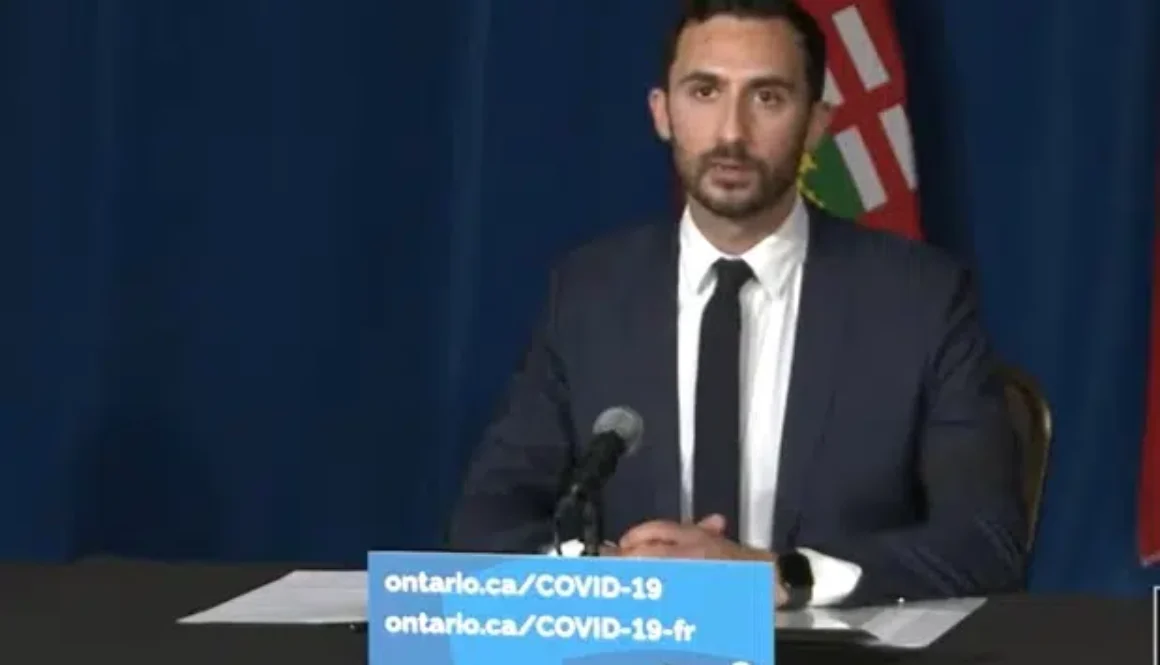
Education Minister Stephen Lecce explains all childcare centres for non-school aged children will remain open while all before and after school programs will be closed.
As for school-aged children of health care and other front line workers, Lecce says there will be free emergency care.
School Boards will also be directed to provide continued in person support for students with special education needs, who can not learn remotely.
“This was not a decision we made lightly, as we know how critical schools are to Ontario students. Our priority has always been to keep schools open, however, sharply rising community transmission can put our schools and Ontario families at risk,” said Lecce. “While Ontario’s plan has kept schools safe, as confirmed by the Chief Medical Officer of Health, we are taking decisive and preventative action today to ensure students can safely return to learning in our schools.”
Lecce adds that they will make the move back to in-person learning as soon as it’s safe to do so.
Premier Doug Ford enacted a provincial state of emergency Wednesday afternoon and has announced a province-wide, four-week long stay at home order to stop the spread of COVID-19.
With rising COVID-19 cases and more young people being hospitalized, the order goes into effect Thursday morning at midnight.
“The Covid-19 situation is at a critical stage and we must act quickly and decisively to stay ahead of these deadly new variants,” says Premier Ford, “By imposing these strict new measures we will keep people safe while allowing our vaccination program to reach more people, starting with our high-risk population and identified hot spots”
Non-essential retail outlets will be restricted to curbside pickup only and big-box stores will be restricted to essential aisles only. Those essential aisles include pharmaceutical, health care and personal care items, groceries, household cleaning supplies and pet care supplies.
Some stores will be allowed to have in-person shopping by appointment only and subject to a 25 per cent capacity limit including:
Safety supply stores
Businesses that primarily sell, rent or repair assistive devices, aids or supplies, mobility devices, aids or supplies or medical devices, aids or supplies;
Rental and leasing services including automobile, commercial and light industrial machinery and equipment rental;
Optical stores that sell prescription eyewear to the public;
Businesses that sell motor vehicles, boats and other watercraft;
Vehicle and equipment repair and essential maintenance and vehicle and equipment rental services; and
Retail stores operated by a telecommunications provider or service, which may only permit members of the public to enter the premises to purchase a cellphone or for repairs or technical support.
Garden centres, plant nurseries and indoor greenhouses will be allowed to operate with a 25 per cent capacity limit.
While tighter restrictions will be in place for retail stores, schools and daycares are set to remain open for in-person care and learning with strict safety measures in place, where allowed by local health units.
Starting next week, education workers who provide direct support to students with special education needs across the province, and all education workers in select hot spot areas, will be eligible to register for vaccination. The Northwestern Health Unit has yet to confirm if education workers will be eligible to register for the shot in our to our catchment area.
Solicitor General Sylvia Jones says the stay at home order will be enforced, though did not provide any details as to what that would look like.
Premier Ford says that they expect to have upwards of 40 per-cent of all adults in the province vaccinated by the end of the stay at home order.
The Premier added that anyone calling for paid sick days from the Ford Government is just playing politics as Ottawa already has a program in place.
This is the third state of emergency in Ontario since the pandemic began.
We use cookies and similar technologies to ensure that our website functions properly and to make your use of our website more convenient. We also use third party cookies and similar technologies that are managed by our business partners or service providers, to develop and improve our website, and to help you see ads on our website and other websites that are matched to your interests. You should be able to disable most cookies associated with our website via your browser settings but this may affect the functionality of the website. You can also opt out of third-party cookies used for targeted advertising by adjusting your cookie settings. To learn more about how we use cookies and how to manage them please see our Privacy Policy or contact us at privacy@ocil.ca.
FunctionalAlways active
The technical storage or access is strictly necessary for the legitimate purpose of enabling the use of a specific service explicitly requested by the subscriber or user, or for the sole purpose of carrying out the transmission of a communication over an electronic communications network.
Preferences
The technical storage or access is necessary for the legitimate purpose of storing preferences that are not requested by the subscriber or user.
Statistics
The technical storage or access that is used exclusively for statistical purposes.The technical storage or access that is used exclusively for anonymous statistical purposes. Without a subpoena, voluntary compliance on the part of your Internet Service Provider, or additional records from a third party, information stored or retrieved for this purpose alone cannot usually be used to identify you.
Marketing
The technical storage or access is required to create user profiles to send advertising, or to track the user on a website or across several websites for similar marketing purposes.