Trustees with the Kenora Catholic District School Board and members of the Ontario English Catholic Teachers Association have come to a local agreement.
The union represents 124 full-time teachers in Red Lake and Kenora, as well as 79 occasional teachers.
Terms haven’t been disclosed.
The contract was finalized last week, with teachers voting 100% in favour of it on Tuesday.
Director of Education Derek Haime says “We have a very good working relationship with our partners OECTA and so we’re very pleased to come to consensus fairly quickly. So it’s nice to have that out of the way so we can face together the challenges that await us.”
OECTA Kenora Unit President Leanne Davidson says “”We are very happy to have finalized our local bargaining process and ratified both our Permanent and Occasional Teachers’ Local Collective Agreements. I know that KCDSB and OECTA will continue to work together as we move forward into the future.”
Davidson says union members decided quickly on the terms of the local agreement as full-time teachers took three days to ratify it, while part-time instructors only needed one day.
It’s a three contract retroactive to September 1st, 2019.
Students in Grade 3 and 6 won’t have to take part in provincially mandated Education Quality and Accountability Office tests next school year.
Education Minister Stephen Lecce says they want everyone to get used to a new Math curriculum.
“We want to make sure that our students, our educators, and the entire education eco-system is able to embrace and learn the new curriculum. We are unveiling a new elementary Math curriculum and we don’t want to impose any stress on our young people.”
Lecce stresses “We want them to focus on adapting to this learning and to a curriculum that I think really reflects the priorities of parents and ultimately the necessary skill sets required in the job market.”
He adds the province is also looking at a digital means to deliver the EQAO testing in future years.
No matter what the 2020-2021 school year looks like, teachers and students in the elementary stream will have to learn a new math curriculum.
The existing program hasn’t changed in 15 years.
Premier Doug Ford says the revamped course will meet current needs and demands and is designed to reverse a decade of declining math scores.
Ford says there will be a heavy emphasis on financial literacy.
“Starting in Grade 4 students will learn about saving and spending. From Grade 5 they’ll start learning how to budget. From Grade 6 onwards they’ll understand financial planning.”
Ford adds “For the first time ever in Canada students from Grades 1 to 8 will learn coding as part of the curriculum.”
He says “Starting in September parents can look forward to a Math curriculum that not only goes back to basics but equips our next generation of leaders and community builders with the Math skills they need to build a brighter future for all of us.”
Ford says the changes were made following 2 years of comprehensive feedback from students, families, teachers and educators.
The government is expecting a smooth transition despite COVID-19 uncertainty.
2019 Math tests revealed 58% of Grade 3, 48% of Grade 6 and 44% of Grade 9 students in the applied courses were meeting provincial standards.
A fun and innovative way to learn more about St. Joseph’s Catholic School in Dryden.
Staff traditionally hold multiple “Welcome to Kindergarten” nights to showcase the school and its programs.
To adjust to COVID-19 restrictions an online tour has been launched for kids and families who will be attending Kindergarten this fall.
Jamie Miller is a Registered Early Childhood Educator and says future students will get to meet teachers and tour some of the classrooms.
“We have put together an Emoji School to help introduce our future students to us. Each teaching team has a Emjoi classroom. You will find their names and number.”
When you tour a classroom, links to videos will appear.
Miller stresses “We really thought it was important to make some kind of connection to our future St. Joseph School Bulldogs and their families. To ease the transition from home to school.”
Three different scenarios have been introduced by the provincial government for the resumption of school this fall.
Minister of Education Stephen Lecce says one option is a normal school routine with strict health standards in place.
Students would go to school every day, in classes that reflect standard class size regulations.
Lecce says the second option is a continuation of remote learning.
The third option is a hybrid one with a mix of at-home learning and in-class learning.
Lecce says the model would “include alternate days or weeks and a staggered balance so that class sizes do not exceed more than 15 students within them.”
He adds “This cohorted approach asks that students remain in contact only with their classmates and a single teacher for as much of the school day as possible. This reduces risks. It enhances contact tracing. It allows kids to be kids.”
Lecce notes each school board will have the power to decide what works best for them, but should have a plan in place for all three scenarios.
The government adds parents who don’t feel comfortable with the school board decision will be able to continue virtual learning.
Premier Doug Ford warns the province will be working closely with local officials over the summer as health and safety is priority number one.
The Ford government is spending $10-million to put more mental health workers in Ontario schools.
Sam Oosterhoff is the Parliamentary Assistant to Minister of Education, Stephen Lecce and says the money is in addition to a previous commitment of $25-million to hire roughly 180 front-line mental health workers in high schools across the province.
“Some of that is up to the individual school board as to how many people they are able to hire with the funding they have been allocated but we believe it’s important that we see that spread out equitably across the province.”
Oosterhoff says “We have seen the COVID-19 outbreak has impacted student mental health and well-being and we believe it’s important to ensure we have wrap-around critical front-line services to help those Ontario students who need it the most.”
The Niagara West MPP believes the investment in mental health will help reduce wait times at health care facilities across Ontario.
The province is also spending $15-million to purchase 35,000 classroom computers.
The government has already pledged internet connectivity at all schools in Ontario, including all high schools by September 2020 and all elementary schools by September 2021.
Friday the government announced that it is investing $736 million more in public education for the 2020-21 school year, increasing the total to more than $25.5 billion. This funding, through the Grants for Student Needs (GSN) program, represents the largest investment in public education in Ontario’s history. As a result, Ontario’s average per-pupil funding amount has reached $12,525, which is an increase of $250 over the previous year.
Oosterhoff says “We just to make ensure that everyone knows we’re working diligently with school boards, educators and with families to make sure our students are able to thrive and succeed as we open schools this fall.”
Minister @Sflecce announced two new investments this morning in advance of a possible reopening of schools:
1. $15 million to purchase classroom computers 2. $10 million to hire additional mental health workers
A study released by the Northern Policy Institute provides a grim outlook on school finances for the 2020-2021 year.
Research analyst Hilary Hagar says northern Ontario colleges and universities will likely see a big drop in International student numbers because of COVID-19.
She notes the financial hit on schools would be a loss of about $58-million in revenue from tuition fees. (Based on 50% decrease in International student enrolment)
Hagar notes this will also impact local economies.
“International students spend considerable amount on rent, groceries, transportation, communication, clothing and we predicted that a 50% decrease in International students would result in a loss of $50-million in local economies as a result.”
Hagar notes Thunder Bay would be the hardest hit, with a projected economic loss of $80-million. (Based on 50% decrease in International student enrolment)
She believes there are things schools can do to help cushion the blow.
“Look at how on-line courses are being delivered. A number of authors have said that the way post-secondary institutions offer on-line courses right now isn’t really attractive to either domestic students or international students.”
Hagar stresses now is the time for administrators of colleges and universities as well as community leaders to strategize and plan a way forward.
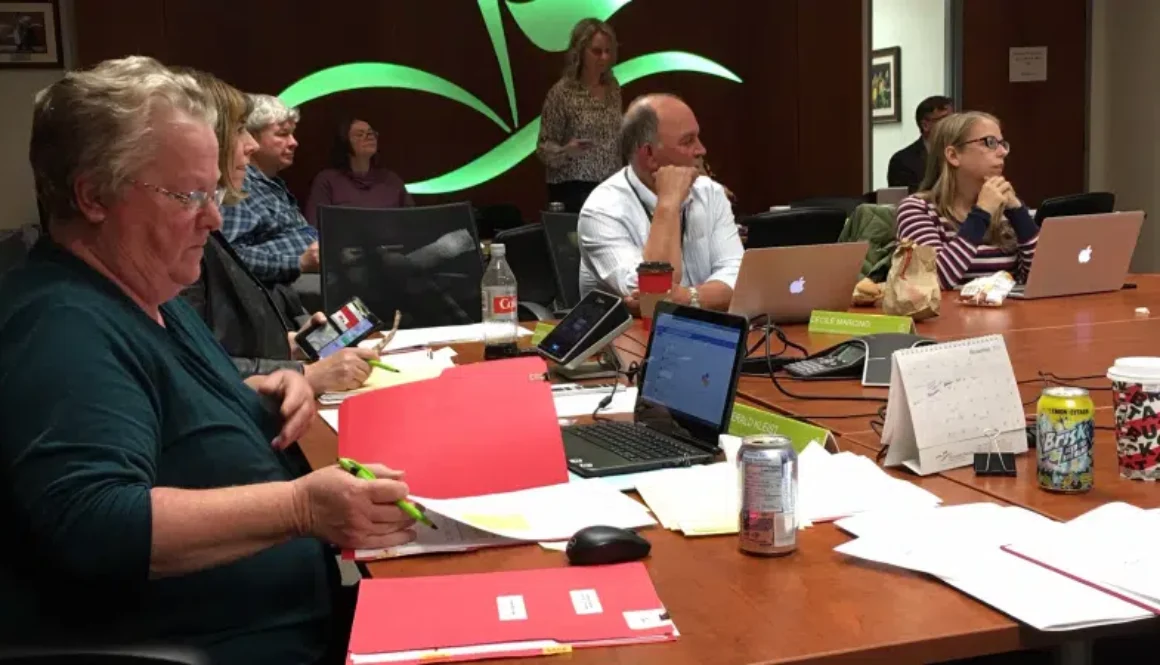
The Keewatin-Patricia District School Board has added to its senior management team.
Jane Lower has been hired as a new Superintendent of Education and will begin her work on August 1st.
Lower is the Student Success Lead with the Lakehead Public School Board in Thunder Bay.
She says she looks forward to working for the local public school board and bringing her own experiences to the team.
Meanwhile, the appointment of Shannon Bailey as Superintendent of Education has been made permanent.
She was named an acting Superintendent earlier this year.
Bailey has been with the KPDSB since 1998 as a teacher in both elementary and secondary schools, specializing in the areas of Special Education, literacy and staff development.
Here is the background on Jane Lower and Shannon Bailey:
Shannon Bailey
Bailey, currently in an interim Superintendent of Education role with the KPDSB, has long been a leader in the organization. Since beginning her career with the KPDSB in 1998, she has worked as a teacher in both elementary and secondary schools, specializing in the areas of Special Education, literacy and staff development. Bailey has been a successful elementary school leader, becoming the Interim Superintendent of Education in September 2019, following seven years in administration at Valleyview Public School and Evergreen Public School in Kenora. She holds a BA/BEd/M Ed from Lakehead University. As an educator, Bailey is guided by the mantra, “See a child differently, see a different child.” Her portfolios have included leading project work for the Board under the guidance of Dr. Stuart Shanker and Susan Hopkins in the area of self-regulation, as well as leading the development of the KPDSB Leadership Framework and Leadership Portal. She is committed to supporting the TRCC Calls to Action and creating partnerships that help support student success. Bailey stated, “I couldn’t be prouder to be in the role of Superintendent of Education for the KPDSB. I am incredibly honoured to work for an organization where every staff member understands what it means to collaborate and learn and puts the needs of our students above all else. I believe strongly in equity of access to education, non-academic supports and opportunities for all students to achieve great things.”
Jane Lower
Lower, currently the Student Success Lead with Lakehead District School Board, brings with her extensive experience as an educator. Since beginning her career in 1992 in Winnipeg, Manitoba, she has worked as a teacher in both elementary and secondary schools in the areas of physical education, cooperative education and student success. She also has experience as a guidance counsellor and in secondary school administration. In 2015, Lower accepted the position of Student Success Lead with Lakehead Public Schools following 14 years with the organization. She holds a Master of Education degree specializing in Educational Leadership from Charles Sturt University. As an educator, Lower is a strong advocate for ensuring equity for all children. Her portfolios have included Indigenous Education, Four Directions approach, collaborative professionalism focused on assessment and evaluation, and data management. Lower is committed to ensuring all students have the skills, knowledge and confidence to pursue their goals in education, career
and life. She has a strong sense of the learning needs of students and is committed to continually enhancing programs to ensure student success. Lower stated, “I am honoured, privileged and excited to be the new Superintendent of Education for the KPDSB. It is clear to me that this board is committed to students, to equity and achievement for all. I believe that establishing and maintaining strong relationships is vital in
education and KPDSB leads the way in ensuring collaboration and engagement with families, staff and community partners. I look forward to bringing my experiences to the board as well as
learning from all of you.”
We use cookies and similar technologies to ensure that our website functions properly and to make your use of our website more convenient. We also use third party cookies and similar technologies that are managed by our business partners or service providers, to develop and improve our website, and to help you see ads on our website and other websites that are matched to your interests. You should be able to disable most cookies associated with our website via your browser settings but this may affect the functionality of the website. You can also opt out of third-party cookies used for targeted advertising by adjusting your cookie settings. To learn more about how we use cookies and how to manage them please see our Privacy Policy or contact us at privacy@ocil.ca.
FunctionalAlways active
The technical storage or access is strictly necessary for the legitimate purpose of enabling the use of a specific service explicitly requested by the subscriber or user, or for the sole purpose of carrying out the transmission of a communication over an electronic communications network.
Preferences
The technical storage or access is necessary for the legitimate purpose of storing preferences that are not requested by the subscriber or user.
Statistics
The technical storage or access that is used exclusively for statistical purposes.The technical storage or access that is used exclusively for anonymous statistical purposes. Without a subpoena, voluntary compliance on the part of your Internet Service Provider, or additional records from a third party, information stored or retrieved for this purpose alone cannot usually be used to identify you.
Marketing
The technical storage or access is required to create user profiles to send advertising, or to track the user on a website or across several websites for similar marketing purposes.